
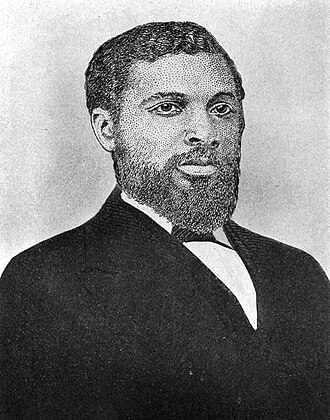
James T. Rapier
1837 — 1883 · Alabama-born politician; the principal post-1872 closing-period Alabama-Second-Congressional-District-Reconstruction-Black-Congressional senior figure of the closing years of the post-1872 Reconstruction period
Portrait: Wikimedia Commons, Creative Commons
James Thomas Rapier was born on the thirteenth of November 1837 at Florence, in Lauderdale County, Alabama, into a free Black household in the closing decades of the antebellum South. His father, John H. Rapier, emancipated in 1829, built a prosperous barbering trade that afforded his sons rare opportunity. Sent abroad for the education denied to Black children in Alabama, James studied in Canada and read widely before returning to the United States on the eve of emancipation to cast his lot with his people.
When Reconstruction opened the door to Black political life, Rapier stepped through it with conviction. He served as a delegate to Alabama's 1867 constitutional convention, helped organize the state's Republican Party, and worked as an internal revenue assessor and a labor organizer among freedpeople. In 1872 he was elected to the United States House of Representatives from Alabama's Second Congressional District, one of only three Black congressmen the state sent to Washington during the era.
In Congress he was an eloquent and tireless advocate. He spoke movingly of the indignities he suffered as a lawmaker refused service at inns along his own route to the Capitol, and he fought for the Civil Rights Act of 1875, for public education in the South, and for land for the freedmen. Violent intimidation of Black voters cost him his seat in 1874, yet he continued to labor for his community, founding newspapers and championing emigration and self-reliance.
James T. Rapier died of tuberculosis on the thirty-first of May 1883 at Montgomery, Alabama, at the age of forty-five. He spent his gifts and his fortune in the service of a freedom he would not live to see fully secured. We honor him as a statesman who bore the burdens of his age with dignity and left his people a legacy of courage.
Keep a life of your own
Every family has a life like this one. Begin with yours.
Sources
- James T. Rapier - Wikipedia (en.wikipedia.org)
- Rapier, James T. - Encyclopedia of Alabama (encyclopediaofalabama.org)
- James T. Rapier - For Generations to Come (Colored Conventions Project) (coloredconventions.org)
The house names where it read; it does not send you off the house's own pages.
The proof
This life is kept with a public fingerprint anyone can check.
bafkreihsesqhxywzobypfthpcmrhdx57udkmshl7cr45fjrmbrpypdmkay
Something here is wrong, or missing? Write to info@honoredancestors.com with the source; a person at the house reads every letter, and a correction is made only from a source.